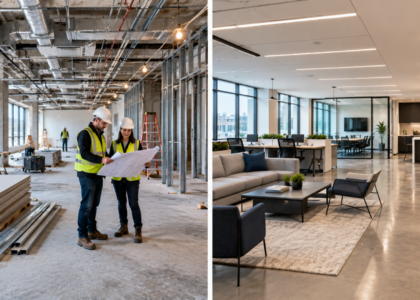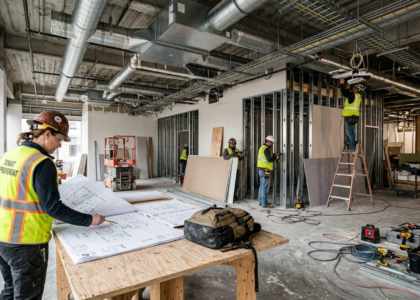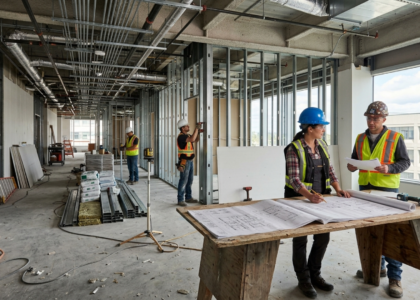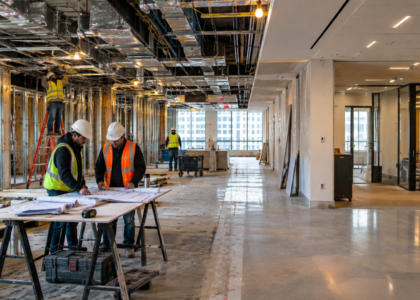





Choosing a commercial construction contractor is one of the most consequential decisions in any NYC project. The contractor you hire shapes how the work is scoped, how trades are coordinated, how problems are handled and how the finished space performs once your business moves in. Add the realities of building in an existing structure, with limited access, delivery constraints and a building full of neighbors, and the stakes rise quickly.
The short answer: choose a contractor whose relevant commercial experience matches your project, who defines scope and exclusions clearly, who documents costs and changes openly, who communicates on a predictable rhythm, and who can explain how permits, trades and schedule will be managed. A low number on a proposal means little if the scope behind it is vague.
This guide explains what a commercial contractor does, what services your project might need, how the process runs, what affects cost and timing in NYC, and which questions to ask before you sign. If you are already comparing companies, our commercial construction company in New York page explains how Charcoal Construction approaches commercial projects.
What Does a Commercial Construction Contractor Do?
A commercial construction contractor takes responsibility for turning a defined scope into a finished, usable space. In practice, that includes:
- Planning: reviewing drawings, requirements and site conditions before work starts
- Trade coordination: scheduling and supervising electricians, plumbers, mechanical contractors, finish trades and others
- Scheduling: sequencing work so trades do not collide and deliveries arrive when needed
- Budget management: tracking costs against the agreed scope and documenting changes
- Construction: overseeing the physical work and its quality
- Communication: keeping owners, building management and other stakeholders informed
- Project delivery: managing inspections where applicable, punch-list items and handover
Two common delivery models are worth separating. In general contracting, the owner typically brings a design prepared by an architect or designer, and the contractor builds from it. In design-build, a single team handles both design and construction under one agreement. Which model suits you depends on how much of the design is already settled and how you want responsibility divided.
Learn more about how Charcoal handles the construction side on our general contracting page.
What Services Might Your Commercial Project Need?
Not every project needs the same scope, and not every contractor offers every service. Before you request proposals, work out which of these your project involves:
- Commercial general contracting: building from existing drawings and specifications
- Commercial design-build: design and construction handled together. See our commercial design-build services.
- Renovations and build-outs: updating an existing space or fitting out a new lease
- Construction project management: coordinating schedule, budget, trades and communication. See our project management service.
- Building permits and approvals coordination: preparing and tracking the approvals a project may need. See our building permit service.
The right scope depends on the project, the building and the responsibilities agreed between you and the contractor. Ask each company to state in writing exactly what it will and will not handle, so you can compare proposals on equal terms.
How the Commercial Construction Process Works
The exact sequence varies by project and jurisdiction, but most commercial builds follow a pattern like this:
- Initial consultation and project requirements: you describe your business, goals, timeline and constraints.
- Site review and scope definition: the contractor reviews the space and the written scope to identify what the project really involves.
- Design, planning and applicable approvals: layouts and drawings are developed or confirmed, and the approvals your project may need are identified and prepared.
- Budget development and scheduling: costs are built from the defined scope, and a schedule is set around design, approvals, procurement and construction.
- Contractor and trade coordination: trades are engaged and their work sequenced, and materials and equipment are ordered against the schedule.
- Construction progress and communication: work proceeds with regular updates, site coordination and quality checks.
- Final inspections, punch list and handover: where applicable, inspections are completed, remaining items are corrected, and the finished space is handed over with the documentation you need.
For a view of how Charcoal sequences these stages, see our process page.
NYC Commercial Construction Considerations
Building in New York involves practical constraints that affect planning from day one. These are the areas to discuss with any contractor:
- Existing-building conditions and site access: older systems, limited access points and shared spaces can affect how work is sequenced.
- Deliveries, material storage and working space: loading access and staging room can be limited, so deliveries often need careful scheduling.
- Coordination with building management: landlords and managers often set rules for contractors, insurance and access.
- Noise, work hours and operational limits: some buildings and neighbors restrict when certain work can happen, especially if other tenants remain open.
- Permits, approvals and inspections: depending on the scope and the building, a project may need approvals before or during construction.
- Scheduling dependencies and communication: a late approval or delivery can affect trades that follow, so stakeholders need timely updates.
Specific permit requirements, approval steps and timelines depend on the project, the property and the authorities involved. Confirm them with your contractor, your design professional and the relevant authorities rather than relying on a generic checklist.
Design-Build vs. Traditional General Contracting
Both approaches can work well. The difference is mainly in who coordinates what, and where accountability sits.
Factor | Design-Build | Traditional General Contracting |
Design and construction | Handled by one team under one agreement | Design is prepared separately, then built by the contractor |
Communication | One main point of contact | Owner often coordinates between designer and contractor |
Accountability | Single party responsible for both phases | Responsibility divided between design and construction parties |
Cost input during design | Construction knowledge can inform design choices early | Pricing often comes after design is substantially complete |
Best suited to | Owners who want one team and a connected process | Owners with a finished design or an existing design team |
Neither is automatically cheaper, faster or better. Before choosing, resolve these questions:
- Is the design already complete, or does it still need to be developed?
- Do you want one party responsible for both design and construction?
- How much involvement do you want in coordinating the design team?
- Does your lease or landlord require a particular architect or process?
What Affects Commercial Construction Costs and Timelines in NYC?
No honest contractor can give a reliable number without a defined scope. These are the factors that move cost and schedule:
- Project size and complexity: larger or more technical spaces involve more work, more trades and more coordination.
- Existing conditions and preparation: demolition, repairs and the state of existing systems can change the scope.
- Materials, finishes and equipment: choices and lead times affect both price and timing.
- Design development and scope changes: changes after pricing can add cost and delay.
- Trade availability and scheduling: the sequence and availability of trades influences the overall timeline.
- Permits and approvals, where required: review periods and required revisions can affect when work can start and finish.
- Site access, delivery logistics and coordination: restricted access can add time and handling.
That is why a project-specific estimate built on a detailed scope is far more useful than any general figure. Treat generic price or timeline claims with caution. If you want to see how materials and equipment sourcing fits into a schedule, read about our procurement service.
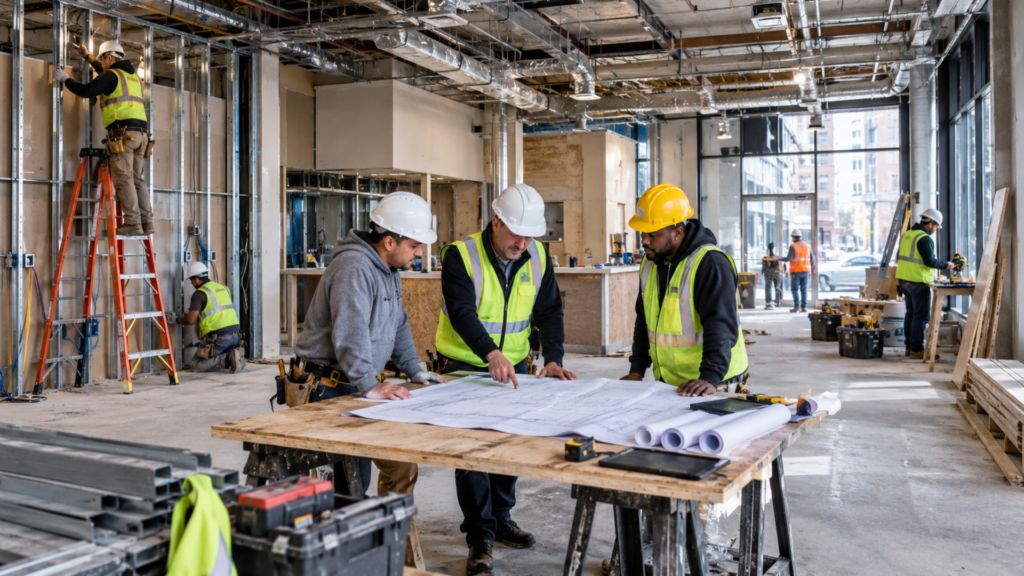
How to Evaluate a Commercial Construction Company
Use the same criteria for every company you consider, so you can compare them fairly.
- Relevant commercial project experience: ask about projects with similar space types, scale and constraints.
- Clear scope of work and exclusions: the proposal should state what is included and what is not.
- Transparent estimates and change-order procedures: look for itemized or clearly structured pricing and a written process for changes.
- Scheduling and progress reporting: ask how the schedule is built and how progress is reported.
- Communication and decision-making: know who your contact is and how decisions are documented.
- Subcontractor and trade coordination: ask how trades are selected, scheduled and supervised.
- Safety and quality-control practices: ask what is in place on site and how quality is checked.
- References and project examples: request references and relevant examples, and ask for documented credentials where they apply to your project.
- Handover expectations and closeout documentation: confirm what you will receive at completion.
You can review examples of Charcoal’s work on our projects page and see what clients say in our Google reviews. As with any company, verify credentials and references that matter to your project directly.
Questions to Ask Before Hiring a Contractor
- Have you handled projects with similar requirements? Relevant experience reduces the chance of surprises with similar space types, constraints and approvals.
- What is included in the proposed scope, and what is excluded? Gaps between proposals usually hide in the exclusions.
- Who will manage communication and scheduling? A named point of contact prevents confusion when decisions are needed quickly.
- How are changes and additional costs documented? A written change process protects both sides from disputes later.
- How are permits and approvals handled for this project? Responsibility for approvals should be assigned clearly, not assumed.
- How will progress, delays and decisions be communicated? You should know how and how often you will be updated, including when something goes wrong.
- What is required before final handover? Clarity about inspections, punch-list items and closeout documents avoids disagreements at the end.
Start Your NYC Commercial Project With Clear Answers
The right contractor will not rush you toward a number. They will ask about your business, review your space, define the scope and explain how the project will run. If you are planning a commercial build-out, renovation or new construction in New York, contact Charcoal Construction to discuss your project, or learn more about our commercial construction services in New York. You can also browse more guidance on our blog.