





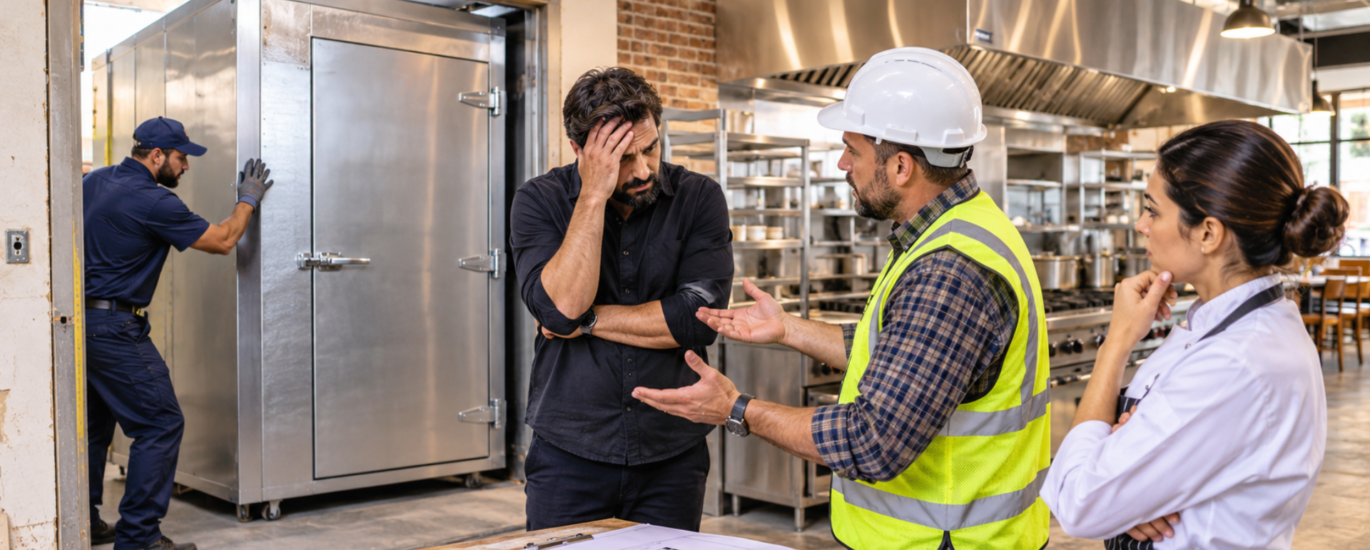
A new restaurant owner orders a walk-in cooler months before opening, only to learn on delivery day that it doesn’t fit through the back door, or that the kitchen plan now places it where the hood exhaust is supposed to go. The cooler was priced well and the supplier was reliable. The problem was timing and coordination.
Situations like this are why restaurant procurement deserves attention early in any opening or renovation. It covers far more than ordering ingredients. It includes the cooking equipment, furniture, fixtures, finishes and daily supplies a restaurant needs to function, along with the budgets and schedules that tie those purchases to construction. When procurement and project planning move together, the kitchen gets built around the right equipment and the dining room arrives as designed. When they don’t, owners often pay for it in delays, rework and compromises.
This guide explains what restaurant procurement includes, how the process works step by step, where owners tend to go wrong, and how procurement connects to design and construction.
What Is Restaurant Procurement?
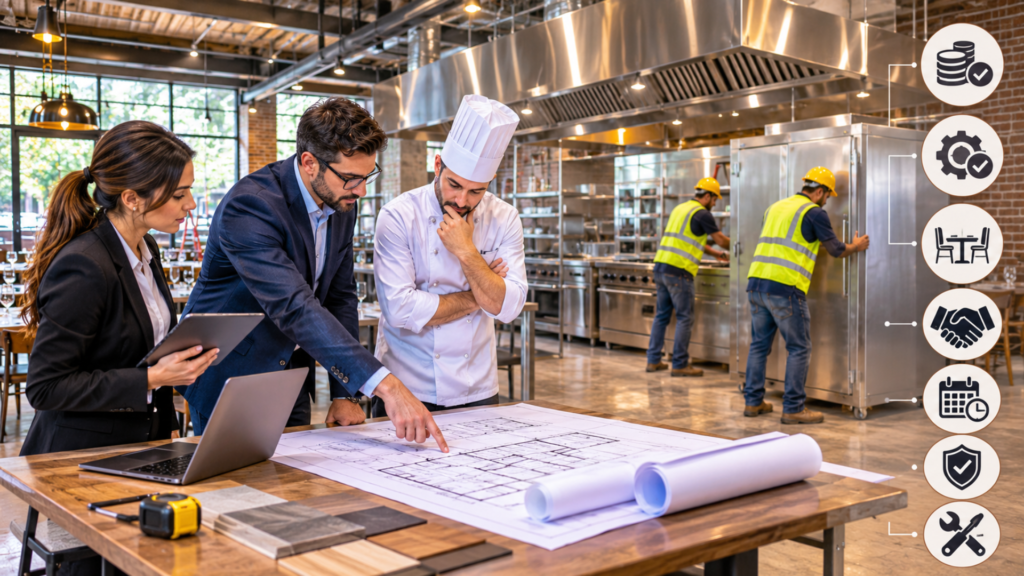
Restaurant procurement is the process of identifying what a restaurant needs, sourcing those items from suitable suppliers, comparing and approving purchases, and coordinating delivery so everything arrives when and where it is needed. It includes supplier evaluation, price and specification comparison, order management and delivery scheduling.
The term covers two related areas:
- Operational procurement is the ongoing purchasing that keeps a restaurant running: food, beverages, packaging, cleaning products and other consumables, usually ordered on a recurring basis from distributors and suppliers.
- Project procurement is the one-time purchasing needed to build, renovate or fit out a space: kitchen equipment, furniture, fixtures, materials and finishes, usually tied to a design, a budget and a construction schedule.
Operational procurement | Project procurement | |
Typical items | Ingredients, beverages, consumables | Kitchen equipment, furniture, fixtures, finishes |
Frequency | Ongoing, often weekly or daily | One-time or occasional |
Main concern | Consistency, freshness, cost control | Specifications, lead times, installation |
Linked to | Menu and inventory | Design, budget and construction schedule |
Most owners deal with both, but the stakes of project procurement are higher per purchase, and mistakes are harder to reverse.
What Does Restaurant Procurement Include?
A restaurant’s purchasing needs fall into five broad categories.
Food and Beverage Supplies
This covers ingredients, beverages and recurring consumables such as paper goods and takeout packaging. Purchasing here is shaped by the menu, expected volumes, storage capacity and delivery frequency. Reliable distributors and clear ordering routines matter more than any single price.
Commercial Kitchen Equipment
Commercial kitchen equipment includes cooking lines, ovens, fryers, refrigeration and freezers, dishwashing systems, prep tables, sinks and storage shelving. Each item needs to suit the menu, the volume of service and the physical kitchen.
Dimensions, utility connections (gas, electrical, water, drainage), ventilation and clearances all need to match the layout. A piece of equipment that performs well on paper can still cause problems if it forces the line into an awkward workflow.
Furniture, Fixtures and Equipment (FF&E)
FF&E stands for furniture, fixtures and equipment. In a restaurant, it typically means tables, chairs, booth seating, bar stools, host stands, counters, lighting and decorative fixtures. These items define how the dining room looks and feels, so they should be selected alongside the interior design, not after it. Seat heights, booth dimensions, lighting temperature and table spacing all affect comfort, accessibility and how many guests the room can serve.
Operating Supplies and Equipment (OS&E)
OS&E stands for operating supplies and equipment. In hospitality, it refers to the smaller items used daily in service: tableware, glassware, flatware, linens, serving trays, kitchen smallwares and similar supplies. OS&E is easy to overlook in early budgets, yet a restaurant can’t open without it. These items also need to arrive in time for staff training and pre-opening service.
Construction Materials and Interior Finishes
For new builds and renovations, procurement includes flooring, wall finishes, ceiling materials, countertops, millwork and other custom interior elements. Material choices affect durability, cleaning requirements and appearance. Custom or imported materials can carry long lead times, so they need to be identified early.
Why Is Procurement Planning Important for Restaurants?
Planning procurement ahead of construction protects several things at once:
- Budget control. Seeing equipment, furniture and materials costs together helps owners spot shortfalls before they become emergencies.
- Equipment suitability. Choosing equipment against the confirmed layout and menu prevents mismatches in size, capacity and utility requirements.
- Kitchen and dining-area functionality. Equipment placement, seating layouts and service paths work better when they are planned together.
- Supplier reliability. Suppliers who communicate clearly and meet delivery commitments keep a project on track.
- Schedule management. Contractors can only finish work in the right order if items arrive in the right order.
- Material quality. Specifications give owners a way to compare suppliers fairly and confirm that what arrives matches what was approved.
- Fewer delays and less rework. Many costly corrections, such as moving a plumbing line or reopening a finished wall, trace back to an equipment decision made too late.
How Does the Restaurant Procurement Process Work?
The restaurant procurement process follows a sequence in which each stage builds on the previous one. The steps below focus on project procurement, which has the most moving parts.
Define Restaurant Requirements
Start with the concept, the menu, the target seating capacity and the style of service. A fast-casual counter, a full-service dining room and a banquet operation all need different equipment and furniture. Clarify what the kitchen must produce at peak hours, how much storage is needed and what the brand experience should feel like.
Finalize the Restaurant Layout and Equipment Requirements
Space planning ties requirements to the physical building. The kitchen layout determines where equipment goes, how staff move between stations and how food flows from receiving to prep to service. Equipment dimensions, clearances and utility connections should be checked against this plan before anything is ordered.
Prepare Specifications and Procurement Budget
Turn the plan into written specifications: quantities, models or performance requirements, finishes, colors and utility needs. Many projects use a Bill of Quantities (BOQ), an itemized list of materials and items with quantities, to keep pricing consistent across suppliers. An equipment schedule works the same way for the kitchen. Build the budget from these documents, and include a contingency for items that change.
Research and Evaluate Suppliers
Compare suppliers on product quality, pricing, experience with restaurant projects, warranty terms, delivery capability and after-sales support. Ask about lead times and what happens if an item is delayed or discontinued. For equipment, find out who handles installation, startup testing and warranty service.
Compare Quotes and Approve Purchases
Request quotes against the same specification so they can be compared fairly. The lowest price does not always mean the best purchase. A cheaper quote may leave out delivery, installation or accessories, or may offer a lower-spec model. Review warranties, service access and delivery dates alongside price before approving.
Coordinate Orders and Deliveries
Once purchases are approved, confirm lead times and match them to the construction schedule. Deliveries should arrive when the site is ready, with clear access, delivery windows and a place to store items safely. Large equipment arriving too early can block other trades. Arriving too late can hold up installation and opening.
Coordinate Installation and Final Inspection
Equipment and fixtures need to be installed, connected and tested. Check that items match the approved specifications, operate correctly and meet the layout requirements. Quality checks and a punch list of corrections should be completed before handover, so the restaurant opens with everything working.
When Should Restaurant Owners Order Kitchen Equipment?
Owners should begin sourcing kitchen equipment once the concept, menu and kitchen layout are firm enough to define equipment requirements, which is usually during or just after the design stage. Ordering earlier risks buying equipment that doesn’t fit the final plan. Ordering too late risks long-lead items arriving after construction needs them. Ask suppliers for lead times as soon as the equipment list is drafted, then work backward from the planned installation date.
How to Manage Restaurant Procurement Costs Effectively
Restaurant procurement costs rarely come down to a single purchase price. Several habits help keep the overall budget under control:
- Create a realistic budget. Base it on specifications and quotes, not rough guesses, and include contingency.
- Prioritize essential purchases. Separate what the restaurant needs on opening day from items that can be added later.
- Compare total cost of ownership. Look at energy use, maintenance, expected service life and warranty coverage, not only the purchase price.
- Check delivery and installation charges. Freight, rigging, installation and startup testing can change a quote significantly.
- Identify long-lead items early. Custom millwork, specialty equipment and imported materials can take longer than expected, and rush charges add up.
- Avoid substitutions and last-minute redesign. Changing a specified item late often affects connected work, such as electrical, plumbing or ventilation.
Common Restaurant Procurement Mistakes to Avoid
Purchasing equipment before finalizing the layout. Equipment may not fit, may block circulation or may need utility changes that weren’t planned.
Ignoring technical specifications. Overlooking electrical load, gas requirements, ventilation needs or ceiling height can lead to equipment that can’t be installed as intended.
Choosing suppliers based only on price. A low quote may hide weaker warranties, slower delivery or limited service support.
Underestimating delivery lead times. Late arrivals can hold up installation, inspections and opening dates.
Not coordinating deliveries with construction progress. Items arriving before the site is ready create storage and damage risks. Items arriving after work is finished may require reopening completed areas.
Making substitutions without design approval. A replacement item may differ in size, finish or utility requirements, creating conflicts with the design.
Overlooking installation and maintenance requirements. Equipment that is difficult to service or install can raise long-term costs and downtime.
How Does Restaurant Procurement Connect with Design and Construction?
Restaurant procurement works best when it runs alongside design and construction, not after them. Each decision in one area affects the others.
Kitchen layouts drive equipment selection. The size and shape of the kitchen, the flow between stations and the required clearances determine which equipment fits. Professional restaurant space planning and design helps confirm that cooking lines, refrigeration, dish areas and storage work together before purchases are made.
Materials and fixtures should match the design concept. Flooring, wall finishes, lighting and furniture all contribute to the brand and guest experience. Selecting them in isolation can lead to mismatched finishes or fixtures that don’t suit the room.
Deliveries follow construction milestones. Some items are needed early, such as materials for rough-in work. Others, like furniture and décor, make sense near the end. Matching delivery dates to milestones prevents both idle waiting and storage congestion.
Installation depends on site readiness. Equipment can only be installed once utilities, flooring, ventilation and structural work are in place. A delivery that arrives before the space is ready can’t be installed, however prepared the owner may be.
Collaboration reduces coordination problems. When owners, designers, contractors and suppliers share one schedule and one set of specifications, conflicts get caught on paper instead of on site. Strong commercial construction project management keeps these parties aligned through timelines, inspections and phased work.
Restaurant Procurement Checklist
Use this checklist to keep project procurement organized:
- Concept, menu and seating capacity defined
- Kitchen layout and dining plan finalized
- Equipment schedule with dimensions and utility requirements
- FF&E and OS&E lists prepared
- Material and finish specifications documented
- Bill of Quantities and procurement budget prepared
- Suppliers shortlisted and compared on the same specification
- Quotes reviewed for delivery, installation and warranty terms
- Long-lead items identified and ordered early
- Delivery windows and storage arrangements confirmed
- Installation, testing and final inspection scheduled
- Substitution approval process agreed with the design team
How Charcoal Construction Supports Restaurant Design-Build and Renovation Projects
Charcoal Construction is a licensed and insured general contractor serving the United States and Canada, with commercial design-build, renovation and project management experience across restaurants, hospitality spaces and other commercial environments.
Charcoal’s value on restaurant projects lies in design-build and project coordination. It does not act as a food distributor or purchasing service. Its role is to help owners plan, build and open a functional space. That includes:
- Design and space planning. Charcoal’s commercial concept design services cover commercial kitchen layouts, dining room design and bar renovations, which give equipment and furniture decisions a solid foundation.
- Construction and renovation. Charcoal’s commercial general contracting services include commercial kitchen and dining-area build-outs, café and restaurant fit-outs and hospitality construction. For existing spaces, its restaurant renovation services support updates to kitchens, dining rooms and bars.
- Project management. Charcoal coordinates FF&E and OS&E deliveries, restaurant kitchen equipment timelines, inspections and phased construction support, helping keep deliveries aligned with the build schedule.
Charcoal’s restaurant projects include Tiarres Brunch n Cakes Cafe, The Cups and Stacked Pancake Breakfast House.
If you’re planning a new restaurant or a renovation and want design, construction and delivery coordination handled together, contact Charcoal Construction to discuss your project.
Conclusion
Restaurant procurement affects almost every part of opening or renovating a restaurant. The right equipment, materials and furnishings need to be specified clearly, budgeted realistically, sourced from dependable suppliers and delivered in step with construction. When those pieces are planned together, owners avoid the common pitfalls of mismatched equipment, missed deadlines and costly rework.
Charcoal Construction is a commercial construction and design-build company serving clients across the USA and Canada. The company provides commercial general contracting, restaurant construction, restaurant renovation, design-build and construction project management services. Its project coordination approach connects procurement planning, equipment requirements, construction materials and installation schedules with overall project delivery.
If you’re planning a restaurant build or renovation, Charcoal Construction can help coordinate design, construction and project management so your space is ready to open. Contact Charcoal to start the conversation.
Frequently Asked Questions About Restaurant Procurement
Restaurant procurement is the process of identifying, sourcing, purchasing and receiving everything a restaurant needs, from ingredients and supplies to kitchen equipment, furniture, fixtures and construction materials. It includes evaluating suppliers, comparing quotes and coordinating deliveries.
It includes food and beverage supplies, commercial kitchen equipment, furniture, fixtures and equipment (FF&E), operating supplies and equipment (OS&E), and construction materials and interior finishes. The mix depends on whether the restaurant is operating day to day or being built or renovated.
Purchasing is the act of buying an item. Procurement is broader: it covers defining requirements, researching and selecting suppliers, comparing quotes, approving orders, arranging delivery and confirming that items meet specifications.
Start once the concept, menu and kitchen layout are clear enough to define equipment needs, typically during or shortly after design. Ask suppliers about lead times early, then plan orders so equipment arrives when the site is ready for installation.
An FF&E procurement plan typically lists tables, chairs, booths, bar seating, counters, lighting, décor and other fixtures, along with specifications, quantities, budgets, suppliers, lead times and delivery dates. It should align with the interior design and construction schedule.
Equipment, materials and furniture all depend on the physical build. Utilities, ventilation, flooring and layout must be ready before installation, and deliveries must arrive at the right time. Coordination reduces conflicts, rework and delays.
Finalize the layout before ordering, prepare clear specifications, confirm lead times early and order long-lead items first. Match deliveries to construction milestones, confirm site readiness before shipments arrive and avoid late substitutions.