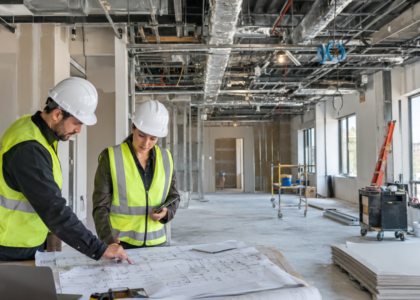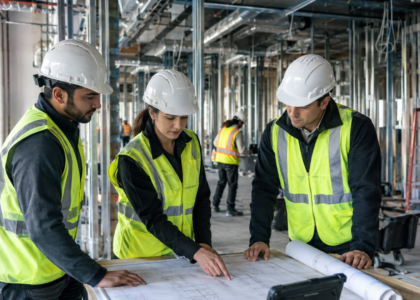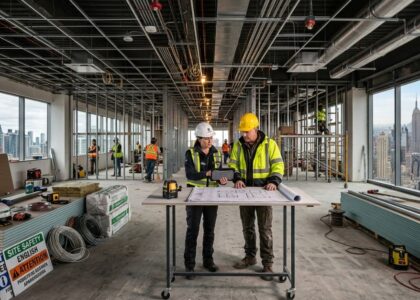





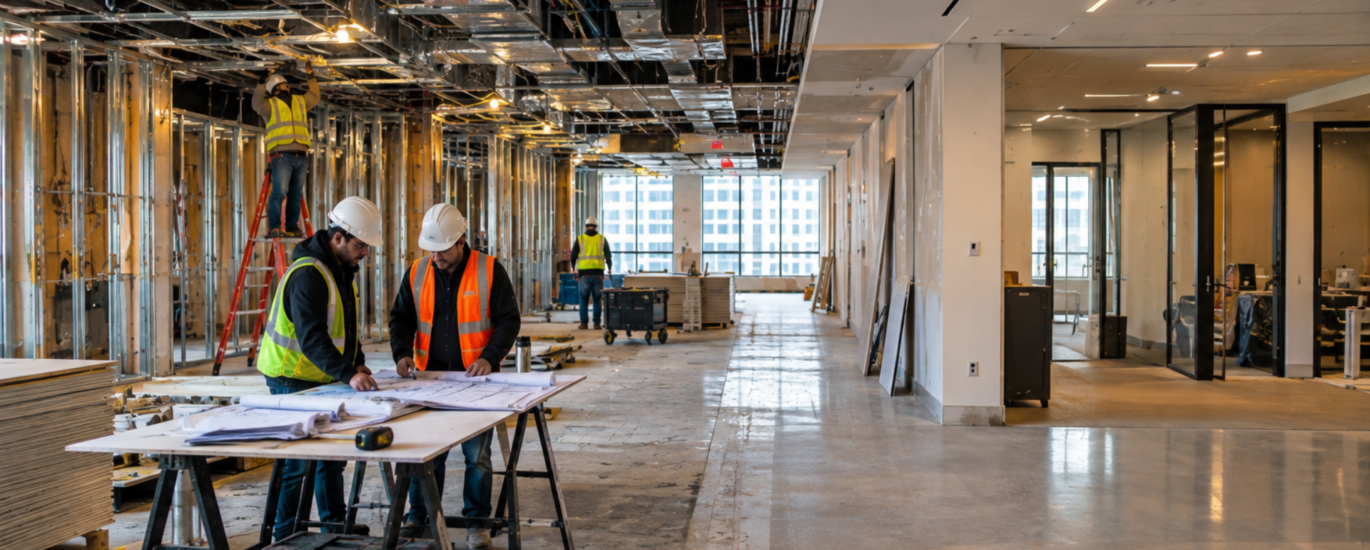
A commercial construction company manages the building side of a business project: budgeting, scheduling, permits, subcontractors, materials, construction, inspections, and closeout. Some firms also handle design through a design-build model. In New York, the choice matters more than it might elsewhere, because most projects happen inside existing buildings, on tight schedules, with landlords, neighbors, and sometimes active tenants to work around.
The contractor you hire shapes more than the finished space. It affects how accurate your budget is, how quickly permits move, how well trades are coordinated, and how many surprises show up after demolition. Two firms can quote the same project and deliver very different experiences.
This guide covers what commercial construction companies actually do, which services to expect, how to compare contractors, what drives cost and timelines, and which questions to ask before you sign anything.
What Does a Commercial Construction Company Do?
A commercial construction company plans, coordinates, and builds spaces used for business, including offices, restaurants, retail stores, hotels, and medical clinics. It typically manages budgeting, permits, subcontractors, procurement, construction, inspections, and final closeout, though the exact scope depends on the contractor and the contract.
Most projects follow the same lifecycle:
- Pre-construction planning
- Budgeting and estimating
- Design coordination
- Permit coordination
- Procurement of materials and equipment
- Subcontractor management
- Construction
- Quality control
- Inspections
- Punch list
- Final closeout
The exact scope varies. One contractor might take a project from concept through handover. Another might only build from drawings your architect has finished. Neither is wrong, but you need to know which one you’re hiring.
What Types of Commercial Projects Can a Construction Company Handle?
Commercial contractors work across many property types, and the differences between them are practical. A firm that has built ten offices hasn’t necessarily built a restaurant kitchen.
Office Construction and Build-Outs
Office work often means reworking layouts inside an existing floor: meeting rooms, open work areas, upgraded lighting, data and electrical needs, and HVAC changes. In multi-tenant buildings, the contractor also has to follow building rules on work hours, freight elevator use, and noise.
Restaurant Construction and Renovation
Restaurants pack a lot into a small footprint. Kitchen ventilation, grease management, plumbing, gas, fire protection, and front-of-house design all have to work together. Equipment specifications usually need to be settled early, since they drive utility and layout decisions.
Retail Construction
Retail projects tend to be deadline-driven, often tied to lease terms or an opening date. Storefront conditions, loading access, and brand design standards all affect how the build-out is planned.
Hospitality and Hotel Projects
Hotel and hospitality work can involve guest rooms, lobbies, restaurants, and back-of-house areas. Renovations in operating properties call for careful phasing so guests and staff are disrupted as little as possible.
Medical and Dental Construction
Clinics and dental offices need more from their buildings than a typical office: plumbing at treatment rooms, electrical capacity for equipment, ventilation, and accessibility. Layouts are usually built around equipment and patient flow, so design and engineering decisions need to be firm before construction begins.
What Services Should You Expect From a Commercial Construction Company?
Not every commercial construction company offers every service, so confirm the scope in writing before signing. Common services include:
- General contracting: managing construction and subcontractors according to the plans. Charcoal’s commercial general contracting is one example of this service.
- Design-build: design and construction delivered through one coordinated team.
- Pre-construction and estimating: defining scope, cost, and schedule before work starts.
- Concept design: early layout and design direction that shapes the budget and permit drawings.
- Permit coordination: preparing and submitting documents for approvals.
- Construction and project management: tracking schedule, budget, communication, and site progress.
- Procurement and trade coordination: ordering materials and equipment and sequencing trades.
- Renovations and build-outs: interior work in existing commercial spaces.
- Final inspections and closeout: completing punch-list items and closing out permits.
Businesses can review Charcoal’s construction and design-build services to see how these fit together for commercial clients across the USA and Canada.
How to Choose a Commercial Construction Company in New York
1. Look for Relevant Commercial Experience
Residential experience doesn’t transfer well to commercial work. Commercial projects involve larger teams, more trades, stricter code review, and schedules tied to business operations. Ask how long the company has worked on commercial projects and what share of its work they represent.
2. Review Comparable Projects
A portfolio only helps if the projects resemble yours. Look for similar property types, similar scale, and similar conditions, such as occupied buildings or older structures. Ask what the contractor’s role was on each project. Did they build from someone else’s drawings, or manage design as well?
3. Understand What the Contractor Actually Handles
Job titles blur in this industry, so ask directly.
- General contractor: builds according to the approved plans and manages subcontractors.
- Design-build contractor: handles both design and construction under one agreement.
- Construction manager: manages the process on the owner’s behalf, sometimes without doing the work directly.
- Specialty contractor: focuses on a single trade, such as electrical or mechanical work.
None of these is automatically better. The question is whether the contractor’s role matches what your project needs.
4. Evaluate Project Management
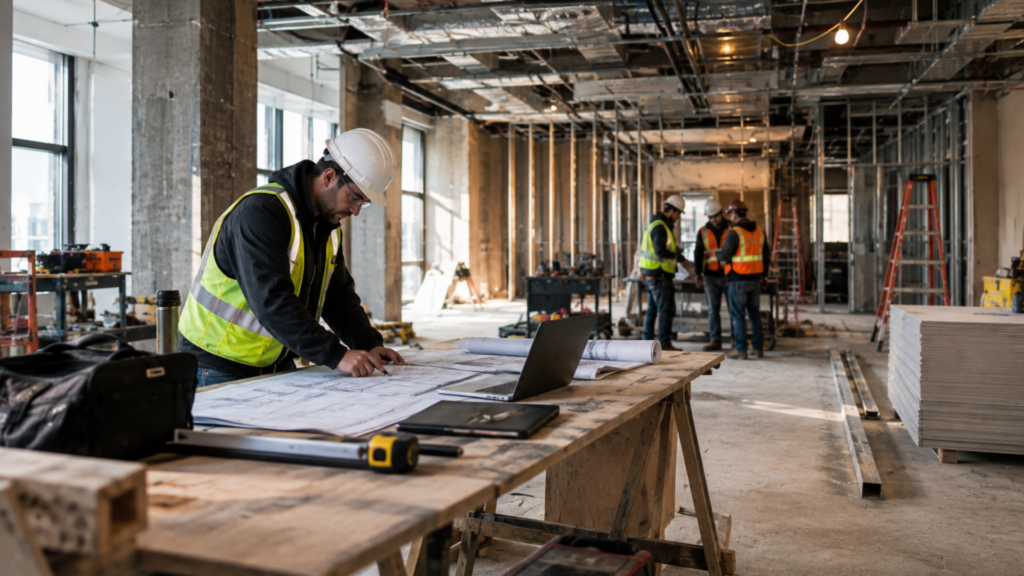
Good project management is often what separates a smooth build from a stressful one. Ask how the contractor handles scheduling, who runs the site day to day, how trades are coordinated, how materials are ordered and tracked, and how quality is checked. Ask how often you’ll get updates and in what form. A contractor with a defined construction project management process should be able to describe it plainly.
5. Ask How the Budget Is Developed and Tracked
A trustworthy estimate is specific about scope. Ask what is included, what is excluded, which items are allowances, and what could change the price. Then ask how costs are tracked during construction and how you’ll be told about changes. Vague line items tend to become change orders later.
6. Ask About Permits and Compliance
Permit and approval coordination can affect both budget and schedule. Ask who prepares the documents, who submits them, and who handles comments from reviewers. A contractor that offers building permit services can often keep design, permitting, and construction better aligned, but you should confirm exactly what they will and won’t handle.
7. Understand the Contract and Scope
Read the contract closely. It should clearly cover:
- Scope of work and exclusions
- Allowances and how unused amounts are treated
- Payment terms and schedule
- Project schedule and key milestones
- Change order procedure
- Responsibilities of owner, contractor, and design team
- Closeout requirements
If something matters to you, it belongs in the document rather than in a verbal promise.
8. Ask for Relevant References
References are most useful when they come from similar projects. Ask past clients how communication worked, whether the schedule held, how problems were handled, and whether they would hire the contractor again. Listen for how the contractor behaved when something went wrong.
General Contractor vs. Design-Build Contractor
Traditional general contracting usually starts with the owner hiring an architect and engineers. Once the plans are ready, the general contractor prices and builds the project. This works well when design is already done or when you want separate teams for design and construction.
Design-build places design and construction under one agreement. Because the builder is involved during design, cost and constructability questions can come up earlier, and there is a single point of contact. This can help when you’re starting from a concept and want one team managing both phases.
Neither model is better in every case. The right choice depends on scope, how complete the design is, your timeline, and how much control you want over each phase. If you’re still shaping the idea, commercial concept design support can help clarify layout and direction before detailed drawings begin.
How Much Does Commercial Construction Cost in New York?
There is no reliable single price for commercial construction in New York, because cost depends on the project’s scope, building, and conditions. A number quoted without knowing those details is a guess, and you should treat it that way.
The main variables include:
- Project size
- Location
- Existing building condition
- New construction versus renovation
- Structural work
- HVAC, electrical, and plumbing requirements
- Fire and life-safety systems
- Interior finishes
- Accessibility requirements
- Design requirements
- Permit and approval requirements
- Material selections and procurement
- Site logistics
- Project schedule
- Occupied versus vacant space
- Changes made during construction
Existing conditions are often the biggest unknown. Once ceilings and walls are opened, older systems, hidden damage, or code upgrades can change the scope. A dependable budget usually requires drawings or a defined scope, a site visit, and enough detail to price the work properly.
What About Commercial Construction Permits and Approvals?
Most commercial construction projects need some form of permit and inspection, but the requirements depend on the project. The location, building type, scope of work, and existing conditions all affect what approvals are needed and how review works.
At a high level, the process usually involves:
- Design documentation and drawings
- Building permit applications
- Plan review by the local authority
- Inspections during construction
- Code compliance checks
- Sign-off at completion
Requirements differ between New York City and other parts of New York State, and even between neighboring municipalities. Rules that apply to a project in one jurisdiction shouldn’t be assumed to apply in another. Confirm requirements with the local building authority or an experienced professional before setting your schedule.
How Long Does a Commercial Construction Project Take?
Commercial construction timelines depend on the project, and no single duration fits every job. A small interior build-out and a full building renovation are very different undertakings.
Factors that shape the schedule include:
- Project size and scope
- How complete the design is
- Existing conditions
- Permit review time
- Procurement and material availability
- Subcontractor scheduling
- Inspections
- Client decisions
- Change orders
Long-lead items such as specialized equipment or custom materials can affect the schedule as much as construction itself. The most reliable timeline comes out of pre-construction planning, when the scope is defined and lead times are known.
What Makes Commercial Construction in New York Different?
Working in New York tends to add logistics that a suburban site wouldn’t have. It helps to be specific about where you are, because New York State, New York City, and the wider NYC metro area don’t operate identically.
Common considerations include:
- Existing buildings: many projects are renovations or interior build-outs inside older structures.
- Urban site logistics: limited staging space, restricted street access, and controlled work hours.
- Deliveries: material drop-offs may need to be scheduled around building rules or local restrictions.
- Multiple trades: several trades often work in confined spaces at once.
- Occupied spaces: neighbors or tenants may remain in the building during work.
- Coordination: owners, designers, landlords, and contractors all need to stay aligned.
- Tight schedules: lease terms and opening dates can leave little slack.
- Permits and inspections: approvals need to be planned into the timeline.
- Ongoing operations: some clients need to keep running while construction happens.
These aren’t reasons to avoid a project. They are reasons to plan it carefully and to hire a contractor who talks about them openly.
Questions to Ask a Commercial Construction Company Before Hiring
- What types of commercial projects do you specialize in? You want a focus that matches your property type.
- Have you completed projects similar to mine? Ask for examples of comparable size and scope.
- Do you provide general contracting, design-build, or both? This tells you what role they’d play.
- Who will manage my project? Ask for the specific person and how often they’ll be on site.
- How do you develop and track the construction budget? Look for a clear, specific process.
- Who handles permits and approval coordination? Find out what’s included and what stays with you or your architect.
- How are change orders handled? They should be documented and approved before extra work proceeds.
- How do you coordinate subcontractors and suppliers? Ask how trades are selected and scheduled.
- How do you manage the construction schedule? Ask how delays are communicated and recovered.
- What is included in project closeout? Confirm punch list, inspections, documentation, and turnover.
Why Pre-Construction Planning Matters
Pre-construction is the work done before anyone swings a hammer: defining scope, developing the budget, reviewing the design, and planning the schedule. It is where most avoidable problems are cheapest to fix.
Good planning surfaces issues such as:
- Unclear or incomplete scope
- Budget gaps
- Design details that are hard to build
- Scheduling conflicts between trades
- Long-lead procurement items
- Permit requirements
- Trade coordination problems
- Changes the owner is likely to want later
It also gives the project team a shared plan. Strong commercial project management starts here, because a schedule and budget built on defined scope are far easier to keep on track than ones built on assumptions.
Planning a Commercial Construction Project in New York?
If you’re planning a commercial build-out, renovation, or new project, Charcoal Construction provides commercial construction, design-build, permitting, and project management support for clients across the USA and Canada. You can contact our team to discuss your project requirements and next steps.